See every path into your application
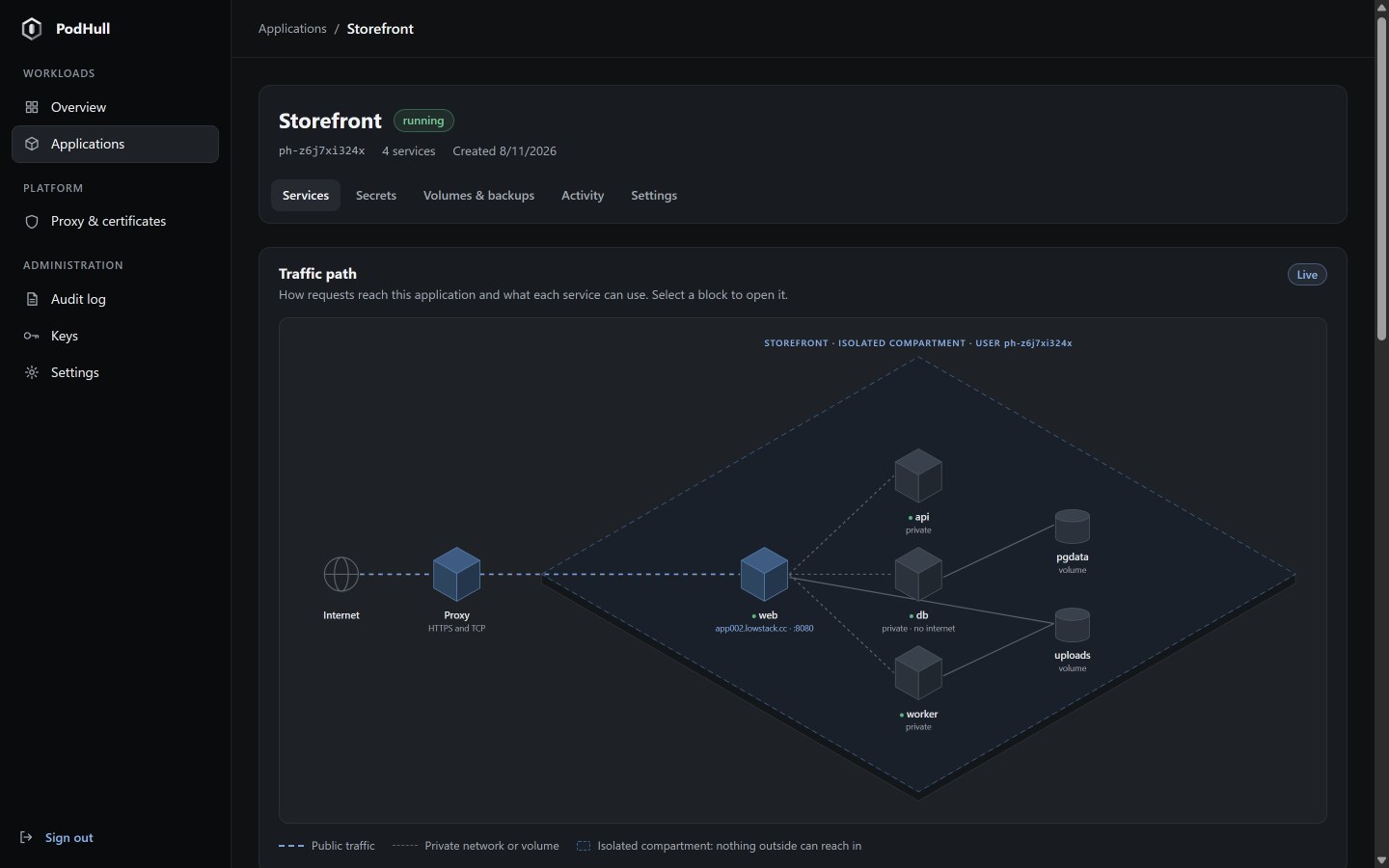
The Traffic path draws what is public, what is private and what each service may reach, live, from the units that actually run.
Explore the Traffic path →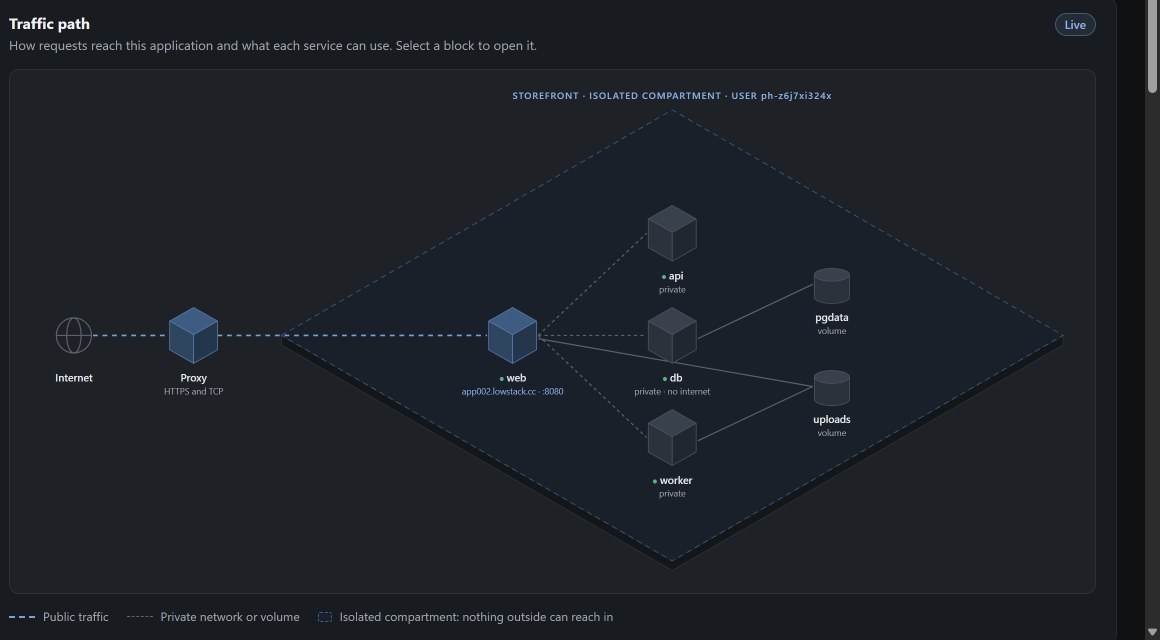
PodHull turns one RHEL server into a polished application platform. It deploys containers with Podman, describes them as Quadlet units and lets systemd run them. No Docker daemon, no Kubernetes, no extra database. Every application lives in its own sealed compartment.
Built entirely on the tools your distribution already ships
Platform
PodHull keeps to what the operating system does well and adds a careful interface on top of it.
The Traffic path draws what is public, what is private and what each service may reach, live, from the units that actually run.
Explore the Traffic path →
A new version starts beside the old one. Traffic moves only when its health check passes. Rolling back takes one click.
The built-in proxy issues and renews certificates through ACME and routes each domain to its service.
People sign in with Ed25519 key files. Revoking a key ends its sessions at once.
Named volumes with scheduled local backups, retention, download and restore.
Build from your Git repository's Containerfile on every push, with signed webhooks from GitHub, GitLab, Gitea and Forgejo.
Every application gets its own Linux user, its own subordinate ID range and its own network. Private services can be cut off from the internet entirely.
Read the security model →Architecture
Terminates TLS on ports 80 and 443, holds the certificates and forwards each domain to the right service.
The web interface and API. It runs unprivileged, checks every request and sends validated orders on.
The only privileged part, started on demand by a systemd socket. It checks each Quadlet unit against strict allow-lists before writing it.
Install
One package, one command. PodHull checks the host, opens what it needs in firewalld, obtains its certificate and prints a one-time setup token.
podhull uninstall removes everything againdnf install ./podhull-1.0.0-1.el10.x86_64.rpm
Complete!
podhull install --domain panel.example.com --acme-email ops@example.com
==> users and directories
==> configuration
==> firewall
==> services
==> panel
==> network table
==> certificate
••••••••••••••••••••••••••••••••
Expires at 2026-11-09T10:00:00Z. It is shown once and registers one key.
Open https://panel.example.com/setup and enter the token.
podhull doctor
ok selinux Enforcing
ok podman 5.8.2
ok certificate valid until 2027-02-05In the open
The latest changes across the PodHull repositories, straight from GitHub.

Free software under the AGPL. No accounts, no telemetry, no lock-in.